Note from writer: This article is an interview assignment for INI106H1: Writing Literary Journalism: Telling the Stories of the City course at the University of Toronto, Fall 2021.
Grade: A+ (93.34%)
Upon their return from a culinary career spanning two continents and the Atlantic Ocean, Michael van den Winkel and wife Jennifer Gittins finally settled in Toronto—only to extend it. They have opened, re-conceptualized, and closed a chain of restaurants and food bars across Toronto in the past decade. Quince, then Noorden, and Little Sister—all based on the northern Dutch and Indonesian cuisine that van Den Winkel enjoyed during his childhood in Amsterdam. “In the Netherlands, Indonesian food is like the curry in England,” he says. “I’d been cooking, studying, and eating Dutch-Indonesian food my whole life. My dad used to cook rijsttafel—rice tables—every week.”
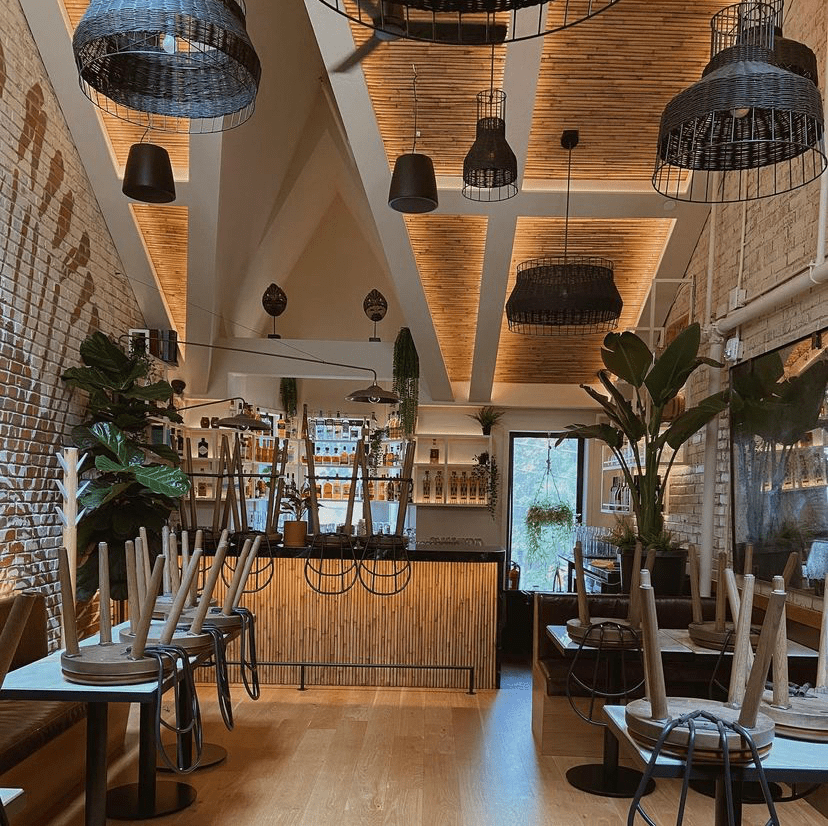
Van den Winkel referred to the elaborate Dutch-Indo feast consisting of 25-40 side dishes in small portions, a tradition dating back to the Dutch colonial era in Indonesia. When he began cheffing at the age of 12, van Den Winkel had no idea that he would be cooking rijstaffel in the Navy every Wednesday for two years upon finishing cooking school, further refining his mastery of Indonesian flavours and spices. Within the next twenty years, van den Winkel and Gittins eventually opened two Dutch-Indo food bars, Little Sister, in downtown Toronto—one in Yonge Street and a more recent one in Portland Street.
How does van den Winkel manage to replicate the authenticity of Dutch-Indonesian cuisine, ten thousand miles away from its birthplace?
Many people have explored the topic of Little Sister’s success. But what’s the struggle behind it?
Jennifer: One struggle is the misconception people have about ethnic food. I’m calling it ethnic food because the Dutch-Indonesian food is not a cuisine that is familiar to Canada, nor does it have a historical significance here. Why should ethnic food be cheap? It’s expensive because it’s done properly!
Michael: As an example, fresh laos—galangal—is more expensive than some of the meats that I’m using. I get a ten-dollar deal for a kilogram of chicken, but I pay sixteen dollars a kilo for galangal.
If you look at a bunch of our recipes, what’s in there? Coriander, ginger, cumin. To follow those recipes and understand the spice combinations? It’s difficult. Sometimes you put lime leaf in one dish, other times not. The ratios are all different. You’ve got to learn about the cooking methods properly to get all these different flavour combinations right. So that leads to another struggle: Finding chefs who want to learn about Dutch-Indonesian cuisine. Everybody sells pizza everywhere, everybody can cook pizza. But many people know nothing about Indonesian food—they know nothing about how to cook it.
What culinary research led to the development of Little Sister’s menu. You visited Bali during the time. Was there anything particularly interesting about the trip?
M: We ate out a lot. We visited local food vendors—the kaki limas—and asked the sellers, “Hey, can I help you make some martabak?” and then spent the whole evening visiting locals’ homes and cooked with them. I also took cooking lessons with Indonesian chefs in Bali. More than anything else, I visited because I wanted to know how far I am off the mark with the flavours and the spicing. I know Toronto is very critical, and I wanted to make sure that I can stand up for the product I’m delivering.
What is your favourite Indonesian dish to cook?
M: To cook? I have to pick one? Well, I know my most favourite to eat: martabak telor. I really like the filling—the eggs with the beef and spices, green onions… Otherwise, on our menu, I like to cook the semur java. However, it’s very labour-intensive.
To make semur java from beginning to end takes us three-and-a-half days. First, we’ve got to make the bumbu. Bumbu takes us two days to make. Then, we’ve got the meat, which takes us a couple of hours to prepare and sear. Lastly, we make the sauce and braise it for another three hours.
There’s a saying that goes, “You can never cook Indonesian food like you cook it at home.” And that’s a well-known phrase in our community because you don’t ever really get it to taste the same, even when Indonesians cook it abroad.
J: Of course, it’s understandable that people tend to make comparisons. People are going to love it or hate it. If they hate it, it’s because the taste is not the way they remembered growing up with.
It’s just like cooking tomato sauce in Italy. You cook yours with white wine, I cook mine with red wine. You put rosemary in yours, I put thyme in mine. It’s still Italian tomato sauce, but it’s radically different. It’s not going to be the same because I’m not cooking in Indonesia. I’m cooking here.
I mean, how many different areas do you have in Indonesia? It’s impossible to even call a single dish Indonesian food. How could you possibly represent all of Indonesia in a menu? You can’t!
If you were to create a unique fusion Dutch-Indo dish to serve at Little Sister, what would you cook, and how would you cook it?
M: We’re experimenting with an Indonesian ceviche-style dish. As you know, most food in Indonesia is served cooked—they don’t eat raw fish plainly. We’re working with sambal ijo, coconut dressing, and taro chips to soak up the raw ceviche. I’m a bit finicky about the dish because Indonesian flavours are so strong. We’ve got to perfect it to achieve the right balance.
What’s in for Little Sister’s future, then?
M: There’s a big movement in getting Indonesian cuisine out in the world. We want to be part of that movement. Apart from Indonesia, the Netherlands, Australia, Indonesian cuisine hasn’t really spread out.
I always say this to every chef that comes to work for me, “Embrace this cuisine. You’re going to learn it and bring it somewhere else.” It’s “buying” the cooking technique and combining the rich Indonesian flavours with other food genres that make it a great part of the learning process. If chefs are smart enough, once they leave our kitchen, they’ve mastered all the recipes. They can cook and introduce Indonesian food elsewhere. That’s an accomplishment for me.
 Hasna Hafidzah
Leave a comment